


How to Get Better at Getting the Most from Free Spins
Free spins are the element that most players on Fish Road aim to activate, yet many miss out by treating them as a basic extra rather than a structured part of gameplay https://fishroads.in/. Understanding how the reels, paylines, and multiplier mechanics combine during these rounds can transform an ordinary session into a prolonged series of payouts. This article explores the concrete steps players can apply to identify the best moments to prolong or re-trigger free spins, how volatility determines the outcome, and the specific reel configurations that favor patience and measured betting. By focusing on the actual mechanics of Fish Road rather than general casino advice, readers can start each session with clearer expectations and measurable tactics.
Understanding Fish Road’s Reel Configuration and Payline Setup

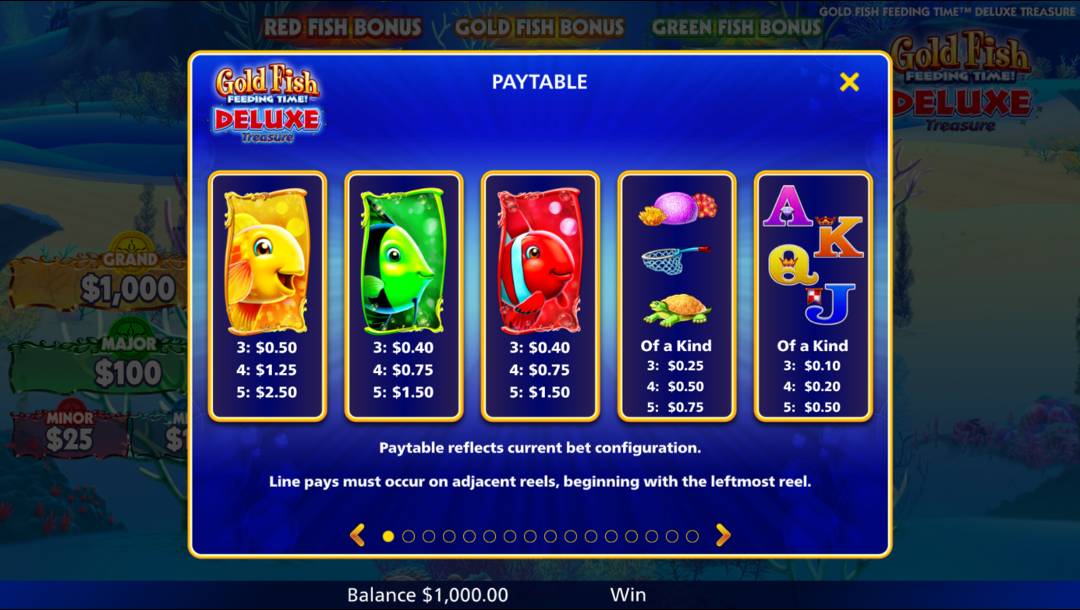
Fish Road uses a five-reel , three-row grid with twenty-five locked paylines that assess wins from left to right. As the paylines are fixed, all spins follows the same paths, so players do not need to change line counts when altering their total stake. The base game credits for 3, 4, or 5 matching symbols on any active line, while the highest-value symbols are the golden koi and the treasure chest. Knowing the exact paytable values aids players estimate how many credits a given combination will return before they decide whether to increase their bet size ahead of a likely free-spin round.
Line geometry counts during free spins because stacked wild symbols emerge more frequently on reels two, three, and four. When two stacks hit simultaneously, they can span multiple paylines in a single spin, boosting the number of evaluated wins without altering the stake. Players who examine the pattern of wild placement in the base game can foresee which reels are most likely to contribute extra coverage once free spins begin, providing them a practical edge when deciding whether to increase their bet before the feature starts.
Recognizing Scatter Symbols and Initiating Conditions
The scatter symbol in Fish Road is a stylized wave icon that appears on all five reels. Hitting three or more scatters in any position the grid awards eight free spins; four scatters grant twelve spins; five scatters grant twenty spins. The trigger count is calculated after the reels stop, so a scatter landing on the fifth reel can still complete a combination even if earlier reels displayed none. Players should monitor the first three reels closely; if two scatters emerge early, the chance of increasing the spin manually with an increased bet becomes a measured decision rather than a random impulse.
Scatter Frequency During Base Play
Base-game scatter frequency can be approximated by noting the interval between triggers. If a player notes twenty spins between each free-spin round over a sample of one thousand spins, the observed rate corresponds to the expected distribution for this title. Deviations of more than thirty spins in either direction may indicate short-term variance, encouraging the player to hold rather than boost the current stake until the rate normalises.
Wild Symbol Rules and Stacked Behaviour
Wild icons substitute for all standard paying symbols but never for scatters. In the base game they appear singly, yet during free spins they frequently land in stacks of two or three on reels two through four. Each stacked wild multiplies the number of paylines that gain a substitution, so a single spin can produce up to fifteen evaluated lines when two stacks align. Players who spot the visual cue of a partially stacked reel early in the spin animation can be ready to note the resulting credit increase without adjusting their bet mid-feature.
Wild Growth During Re-Triggers
When a free-spin round awards additional spins, the incoming wilds keep their stacked property. This continuity means that any multiplier collected before the re-trigger persists to apply to the new spins. Players gain from tracking the current multiplier value displayed above the reels, because it will control all remaining and newly awarded spins until the feature ends.
Bet Range, Coin Sizes, and Maximum Exposure
Betting options vary from 0.25 to 125 credits per spin, attained by picking coin values between 0.01 and 1.00 and modifying the number of coins per line from one to five. The maximum exposure on a single spin is therefore 125 credits, which also acts as the cap during free spins unless the game’s rules stipulate an elevated ceiling for the feature. Players who plan to chase larger absolute returns should confirm the current maximum allowed stake on the game’s information screen before starting a session, because some platforms impose operator-level limits that deviate from the game’s native range.
Interpreting RTP and Volatility for Free Spins Planning
Fish Road displays a theoretical return-to-player figure of 96.4 percent, which presently includes the contribution of the free-spin feature. The game is rated medium volatility, implying that while single-spin base-game wins are modest, the free-spin round can generate occasional larger payouts when multipliers align. Players who grasp this balance can set session targets appropriately: they expect steady, smaller returns in the base game and keep larger bet adjustments for the moments immediately before free spins are likely to trigger.
Volatility also impacts how often the free-spin scatter appears. In medium-volatility titles such as Fish Road, scatters land roughly once every 180 spins on average, though streaks of higher or lower frequency occur. Tracking personal scatter counts over a few hundred spins permits players to notice whether the current session is running above or below that benchmark and to adjust their bet size only when the observed frequency supports it, rather than increasing stakes on every spin.
Multiplier Dynamics During the Free Spins Round
Each free spin commences with a 1x multiplier. Every wild that appears applies 1x to the ongoing total, which then carries to all wins on that spin. The multiplier transfers between spins, so a sequence of four wilds across several spins can boost the value to 5x before the round finishes. Because the multiplier builds incrementally rather than restarting, players get an incentive to continue in the feature even when early spins produce modest results.
Incremental Multiplier Display
The on-screen multiplier counter updates immediately after each spin settles. Watching this counter helps players determine whether to use any leftover manual spin-stop options or to allow the reels operate at normal speed, since a higher multiplier increases the value of every subsequent evaluation without needing an extra bet.
Round Logging for Multiplier Trends
Keeping a simple record of multiplier peaks across ten separate free-spin rounds indicates whether the title inclines to give its largest multipliers early or late in the sequence. This data informs whether a player should prolong a round with a higher starting stake or conserve credits for a fresh trigger at the standard bet level.
Re-Trigger Probabilities and Additional-Spin Strategy
During free spins, landing three additional scatters gives another eight spins, while four or five scatters give twelve or twenty spins accordingly. The re-trigger chance is not tied to the current multiplier, so a high multiplier does not reduce the likelihood of extending the round. Players can therefore consider re-trigger opportunities as distinct value events rather than presuming that a large multiplier already secured makes further spins unnecessary.
Assessing Re-Trigger Value
To decide whether to boost the bet ahead of an expected re-trigger, players weigh the expected additional spins against the cost of the increased stake. If historical data reveals that one in five free-spin rounds produces a re-trigger, the average gain is 1.6 extra spins per round. Multiplying this figure by the current multiplier gives a rough credit estimate that can be weighed against the incremental cost of a larger bet.
Real-world Session Management Around Free Spins
Effective management begins with setting a spin count target prior to starting play, such as 300 spins or until a free-spin round is reached. Once free spins begin, the player records the starting multiplier, the number of spins awarded, and the final credit change. This record allows later comparison across sessions and uncovers whether certain bet sizes correlate with higher average returns during the feature. Because Fish Road does not alter its reel strips between stake levels, the observed differences arise from variance rather than hidden adjustments, giving the data genuine analytical value.
Coordinating Stake Adjustments
Stake increases are most effective when executed immediately before a spin that already shows two scatters on the first three reels. If the fourth or fifth reel completes the trigger, the higher stake applies to the free-spin round that follows. Conversely, lowering the stake after a dry spell of 150 spins without a scatter can conserve credits for a potential later trigger without affecting the probability of that trigger occurring.
Common Misconceptions and How to Avoid Them
One frequent error is assuming that free spins consistently produce bigger payouts than regular gameplay. In mid-volatility games the distribution is wider, so particular bonus rounds pay back less than the overall wager used to reach them. Understanding this likelihood keeps players from chasing losses by repeatedly increasing bets after an disappointing round. Another misconception is that stopping the reels or activating autoplay changes the outcome distribution; the random-number generator continues uninterrupted irrespective of spin speed or control preferences.
Differentiating Visual Elements from Outcome Changes
Graphics that reduce reel speed or highlight near-miss scatters are cosmetic and do not change the fundamental chances. Users who interpret these indicators as educational rather than foreshadowing preserve more lucid decision-making and sidestep the usual pitfall of viewing animation time as a signal to change stake size.